Get A Free Quote It takes only 5 seconds
Open 24/7 Serving Los Angeles & Ventura County
Emergency service available 747‑202‑3622
Guides

What Is Soft Washing and Is It Safe for Your Home?

A straight answer from the crew that does this work across Los Angeles and Ventura County every week.

Licensed & InsuredSatisfaction GuaranteedFamily Owned & Operated
Free Estimate · No Obligation

Get a Fast Quote

Tell us where & what, we'll get right back to you.

Please enter your name
Enter a valid email
Enter a valid phone number

It takes 5 seconds

Request Sent!

Thanks, we got it. A member of the WashPro crew will reach out shortly with your free estimate.

Or Call Us Now
The Short Answer

Soft washing is a low-pressure cleaning method that pairs water with a biodegradable cleaning solution to kill the biological growth on your home's exterior at the source, rather than blasting it off with high pressure. Yes, it is safe. WashPro SFV uses diluted, plant-compatible formulas and thorough rinse protocols to protect landscaping, siding, and paint finishes.

Soft washing combines very low water pressure with a surfactant-based cleaning solution, typically containing sodium hypochlorite at a controlled dilution, to eliminate algae, mold, mildew, lichen, and the bacteria that cause black streaks. The surface is treated, the biology dies, and the debris is rinsed away gently. Nothing is forced into the substrate. No seams are blown open. No granules are stripped from a shingle.

For homeowners across Los Angeles and Ventura County, where marine air, coastal humidity, and heat cycles create ideal conditions for algae growth, soft washing is frequently the most appropriate tool for the job, not a backup to pressure washing.

The Method

How Does Soft Washing Actually Work?

Two ingredients and a controlled application turn a green, stained exterior into a clean one. Here is what each part does.

The Cleaning Solution

A typical soft wash mix includes three components. First, sodium hypochlorite (the same compound used in pool maintenance) at a diluted concentration. Second, a surfactant that keeps the solution on the surface long enough to work instead of running straight off. Third, water to bring the mix to the correct working strength for the specific surface being treated.

The dilution matters. Roofing manufacturers, siding manufacturers, and industry groups like the Asphalt Roofing Manufacturers Association (ARMA) have long recommended chemical cleaning over high-pressure methods for exactly this reason. The chemistry does the killing; the water does the rinsing.

The Application

Solution is applied at garden-hose-level pressure or below, typically under 100 PSI at the nozzle. A standard pressure washer operates in the 1,500 to 4,000 PSI range. That gap is significant. There is no mechanical force that can dislodge mortar, crack grout, or slice through old caulk. The solution sits on the surface for a dwell time of several minutes, then is rinsed off thoroughly.

What Gets Killed vs. What Gets Lifted

High-pressure water moves organic material without killing it. Spores and root systems stay in the surface pores and regrowth happens in weeks. Soft washing targets the biology directly. The result is a surface that stays cleaner for longer because the organisms responsible for staining are eliminated at the cellular level, not just removed from view.
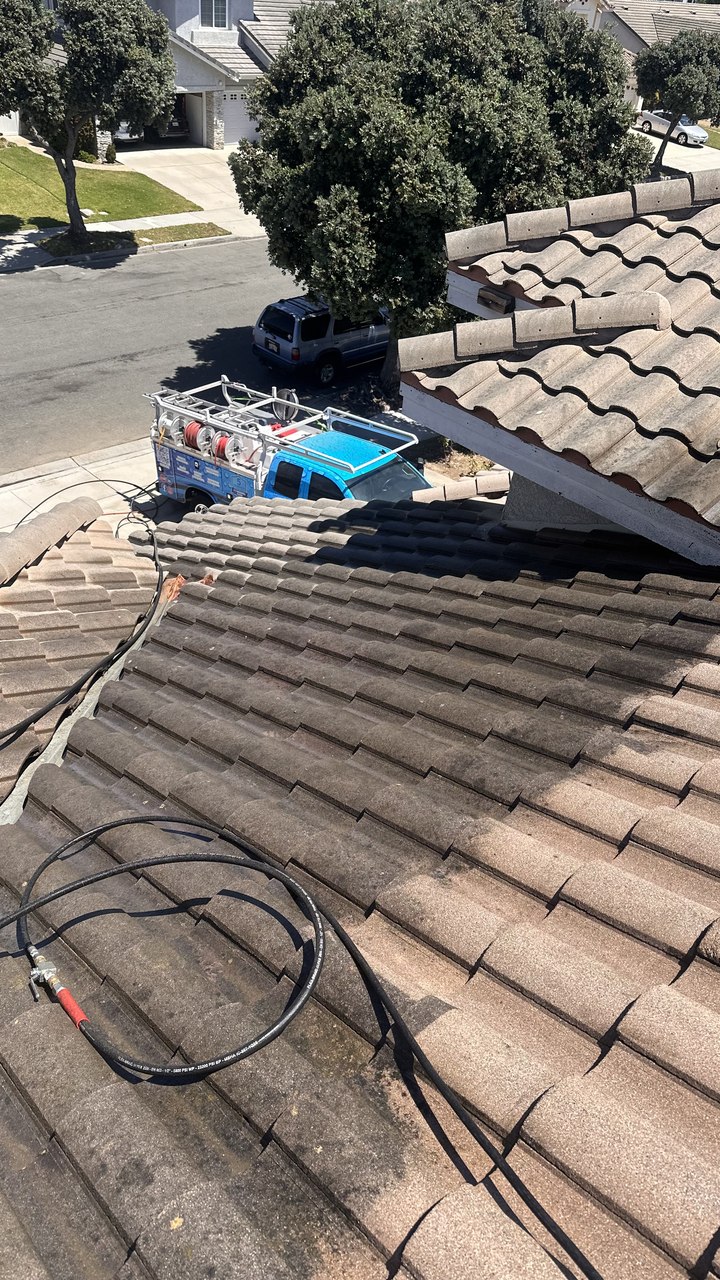
Technician applying soft wash solution to a home exterior
Safety

Is Soft Washing Safe for Your Home and Landscaping?

The short version: yes, when done correctly. The longer version covers what correct looks like in practice.

Surfaces Soft Washing Protects vs. Surfaces It Replaces Pressure Washing For

Surface Recommended Method Why
Asphalt shingles Soft wash only High pressure strips granules and voids manufacturer warranties
Tile roofs Soft wash, low pressure rinse Pressure cracks aged tiles and forces water under laps
Stucco siding Soft wash with gentle rinse Stucco is porous; high pressure drives water into the substrate
Wood siding and trim Soft wash Pressure splinters soft wood grain and forces water into seams
Painted surfaces Soft wash Pressure strips paint at edges and along caulk lines
Concrete driveways Pressure washing Dense surface tolerates pressure well; chemical assist for deep stains
Window glass Traditional window cleaning Soft wash solution residue requires a proper squeegee finish

Plant Protection Protocol

Sodium hypochlorite at working concentrations will damage plant tissue if it contacts foliage without protection. A professional soft washing crew pre-wets all plants, shrubs, and lawn areas before application, covers sensitive specimens when necessary, and performs a thorough post-rinse on all surrounding vegetation after the job. This step is not optional. It is the difference between a professional application and a DIY attempt that burns your landscaping.

At WashPro SFV, plant protection is a standard part of every soft wash job. It is not an upsell. Our crew pre-wets the perimeter before any solution goes on the house.

What About Pets and Children?

Keep them inside during application and for 30 minutes after the rinse cycle. Once the treated surfaces are dry and the solution has broken down, the area is safe. The hypochlorite oxidizes and dissipates on contact with air and water. There is no long-term chemical residue left on your home after a proper rinse.

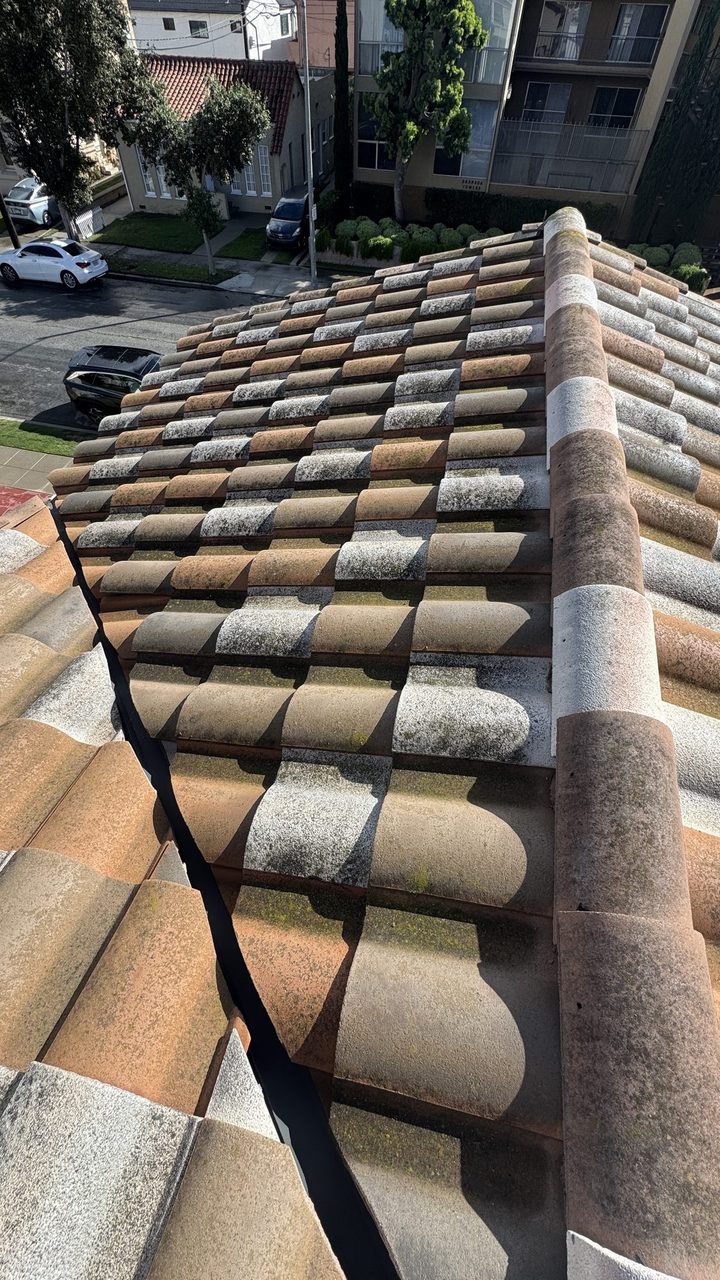
Tile roof covered in dark algae growth before soft washing treatment Same tile roof restored to clean uniform color after soft washing
Results

Why Soft Washing Outlasts Pressure-Only Cleaning

Mechanical cleaning moves the problem. Chemical cleaning solves it. That difference shows up months later when your neighbor's pressure-washed roof turns green again and yours is still clean.

Algae, the most common cause of black and green staining on Southern California roofs and siding, reproduces from spores. When you pressure wash a stained surface, you remove the visible growth but leave millions of microscopic spores embedded in the surface material. Those spores have water, sunlight, and a nutrient-rich substrate. They regrow. The timeline varies by surface orientation and moisture exposure, but regrowth on pressure-only cleaned roofs is common within a season.

Soft washing eliminates the spores along with the visible growth. A well-executed soft wash on a tile or asphalt roof typically keeps results visible for two to four years on the same surface under normal Southern California conditions, though coastal properties with more persistent marine layer exposure may see biological regrowth more quickly than inland homes.

For homes in LA and Ventura County that deal with marine air pushing moisture inland, and with shaded roof sections that stay damp longer, the difference between soft washing and pressure washing is not a minor one. It is months of clean versus a revolving door of staining.

From the crew: When we soft wash a roof, we apply solution to the entire field and give it a full dwell period. If there are heavy concentrations of lichen or thick algae colonies, we may make a second pass. The goal is thorough biological kill, not just a surface that looks clean on the day. That approach is what drives the long results our customers see.
Decision Guide

When Should You Choose Soft Washing Over Pressure Washing?

The right method depends on the surface and the type of contamination. This is a practical guide, not a sales pitch for one approach over the other.

The clearest signal to use soft washing is any surface that is fragile relative to high water pressure. Roofs, painted siding, stucco, and wood fall into this category without exception. If the surface can be damaged by force, the cleaning chemistry does the work instead.

The second signal is the type of growth present. Organic staining from algae, mold, mildew, or lichen calls for a biocidal approach. Pressure alone will not kill it. Soft washing will.

Pressure washing earns its place on hard, non-porous surfaces where mechanical force is both safe and effective. Concrete driveways, brick pavers, and similar dense substrates handle high PSI without damage, and the mechanical action helps lift embedded grease and sediment that chemistry alone might not move efficiently. Many jobs use both methods on different parts of the same property.

If you are trying to decide which method applies to your situation, the fastest path is a conversation with someone who has seen both approaches work and fail across hundreds of properties in this region. That is what WashPro's house washing service is built around, matching the right technique to your specific exterior.

Common Questions

Soft Washing Questions, Answered Plainly

No, when mixed and applied at the correct dilution. Paint and siding manufacturers designed these surfaces to resist moisture and mild chemicals. A properly diluted soft wash solution will not strip paint or pit siding materials. The risk with DIY applications is using too-strong a mix or skipping the rinse, both of which a licensed crew avoids by following consistent concentration protocols.

Technically possible, but the access and chemical handling risks make it a job most homeowners should not take on. Applying sodium hypochlorite solution on a sloped roof requires proper footwear, chemical-resistant gear, and controlled application equipment. A slip on a wet roof, or a saturated chemical spray drifting toward your face or your neighbor's property, is a real hazard. Licensed and insured exterior cleaning professionals carry the liability so you do not have to.

Results are visible the same day the job is completed. After rinse, the treated surfaces show a significant color change immediately. Heavy lichen colonies may leave faint ghost marks that continue to lighten over the following weeks as residual material breaks down further with rain and UV exposure. The biological kill happens within the dwell period on the day of service.

Soft washing is the right choice for stucco. Stucco is a porous, cement-based finish coat that absorbs water readily. Directing high-pressure water at stucco forces moisture past the finish layer and into the wall cavity, which can contribute to moisture damage and mold growth behind the walls over time. A low-pressure soft wash cleans the surface without driving water into the substrate. This is a common concern for stucco homes in coastal LA and Ventura County communities where the material is widely used.

Free Estimate

Let's make it
shine.

Call, text or send the form. We'll get right back to you with a free, no-pressure estimate, anywhere in Los Angeles or Ventura County.

Call or Text
Hours
Open 24/7
Emergency service available
Payments Accepted
CashCardDirect DepositCheck

Request Your Free Estimate

Fill this out and we'll be in touch fast.

Please enter your name
Enter a valid phone number
Please choose a service

No spam, no obligation. We'll only use your info to give you a quote.

Request Sent!

Thanks, we got it. A member of the WashPro crew will reach out shortly with your free estimate.

Or Call Us Now

Ready to restore the
look of your property?

Get A Fast Quote
Call Now Free Estimate