A straight answer from the crew that does this work across Los Angeles and Ventura County every week.
Thanks, we got it. A member of the WashPro crew will reach out shortly with your free estimate.
Or Call Us NowSoft washing uses low pressure and cleaning solutions to kill biological growth on roofs, siding, and stucco. Pressure washing uses high-pressure water to blast away hardened grime from concrete, pavers, and brick. Most homes in Los Angeles and Ventura County need both, depending on the surface. WashPro SFV handles both methods with the same licensed, insured crew.
Two distinct processes. Each has a job it excels at, and a surface it can destroy when misused.
Soft washing delivers water at low pressure, typically under 500 PSI, mixed with a biodegradable surfactant and a diluted sodium hypochlorite solution. The cleaning work happens chemically, not mechanically. The solution dwells on the surface, breaks down algae, mildew, lichen, and bacteria at the root level, and is then rinsed away gently. Because the nozzle pressure is similar to a garden hose, the surface substrate stays intact.
That matters on Southern California homes. Stucco, painted wood siding, fiber cement panels, and clay or concrete tile roofs are all porous or surface-coated materials. Force a high-pressure stream into them and you strip paint, erode mortar, crack tile glazing, or drive moisture behind the cladding. Soft washing eliminates the growth without touching the integrity of the material underneath.
Pressure washing drives water at high velocity, commonly 1,500 to 4,000 PSI, through a focused nozzle to physically dislodge contaminants. There is no chemical dwell time. The force of the water does the work. Hardened concrete, clay pavers, brick masonry, and sealed pool decks respond well because the dense surface can absorb the impact without damage. The organic grime and embedded tire marks that a mop or scrub brush cannot touch come free quickly under that kind of pressure.
The key distinction: pressure washing cleans through force, soft washing cleans through chemistry. Choosing the wrong method for a given surface causes either inadequate cleaning or surface damage. A trained technician identifies the surface, checks the coating, and selects the correct process before a single drop of water hits the property.
Use this as a quick reference. When in doubt, a free on-site estimate from a professional removes all guesswork.
| Surface | Correct Method | Why |
|---|---|---|
| Tile or concrete roof | Soft Wash | High pressure cracks tile, displaces granules, and voids most manufacturer warranties |
| Stucco exterior walls | Soft Wash | Stucco is porous; pressure forces water behind the cladding and can cause interior moisture damage |
| Wood or fiber cement siding | Soft Wash | High pressure strips paint, raises wood grain, and can splinter aged boards |
| Painted or coated surfaces | Soft Wash | Chemical cleaning preserves the coat; pressure peels or etches it |
| Concrete driveway or walkway | Pressure Wash | Dense substrate handles the force; surface agitation removes oil, tire marks, and embedded grime |
| Brick pavers and patio | Pressure Wash | Hard material tolerates impact; restores color without chemical residue concerns |
| Saltillo or concrete pool deck | Pressure Wash | Algae-slicked sealed surfaces clean thoroughly under pressure without bleach near pool water |
| Fencing (vinyl or PVC) | Soft Wash or Low Pressure | Moderate pressure is fine; excessive PSI can crack vinyl panels or blow off post caps |
| Solar panels | Soft Wash / Deionized Rinse | Manufacturer specs prohibit high-pressure streams; gentle rinse preserves glass and frame seals |
| Windows and glass | Traditional or Soft Wash Rinse | Pressure can crack panes, blow seals on double-pane units, or chip frames |
Southern California's climate creates conditions that other regions rarely see. Understanding why matters before you pick a cleaning method.
The dark streaks running down tile roofs across Los Angeles and Ventura County are not just dirt. They are Gloeocapsa magma, a cyanobacteria that feeds on the limestone filler in roofing materials. Left untreated, it etches into the tile surface and retains moisture, accelerating deterioration. Algae colonies spread across stucco and wood siding in a similar pattern, starting as a faint green tint and progressing to a thick biological film that holds moisture against the wall.
High-pressure water cannot kill this growth. It knocks the visible portion off the surface, but the root structure and spores remain. Regrowth appears within weeks. Soft washing kills the organism at the root, so the surface stays clean significantly longer. The chemistry, not the force, is doing the real work.
Southern California stucco is a three-coat cement system over a moisture barrier and wire lath. That barrier holds until high-pressure water finds a hairline crack or a gap at a window frame. One pass through an imperfect area can drive water behind the cladding and saturate the framing. Soft washing eliminates the risk entirely because the delivery pressure never exceeds what a standard irrigation system produces.
Many tile and shingle roofing manufacturers specify low-pressure cleaning in their maintenance documentation. High-pressure washing that displaces granules from a shingle or fractures the glaze on a clay tile can nullify that warranty. If you have a relatively new roof, the method your contractor uses matters directly to your coverage.
Dense masonry is built to take impact. Soft washing alone rarely delivers the deep clean these surfaces need.
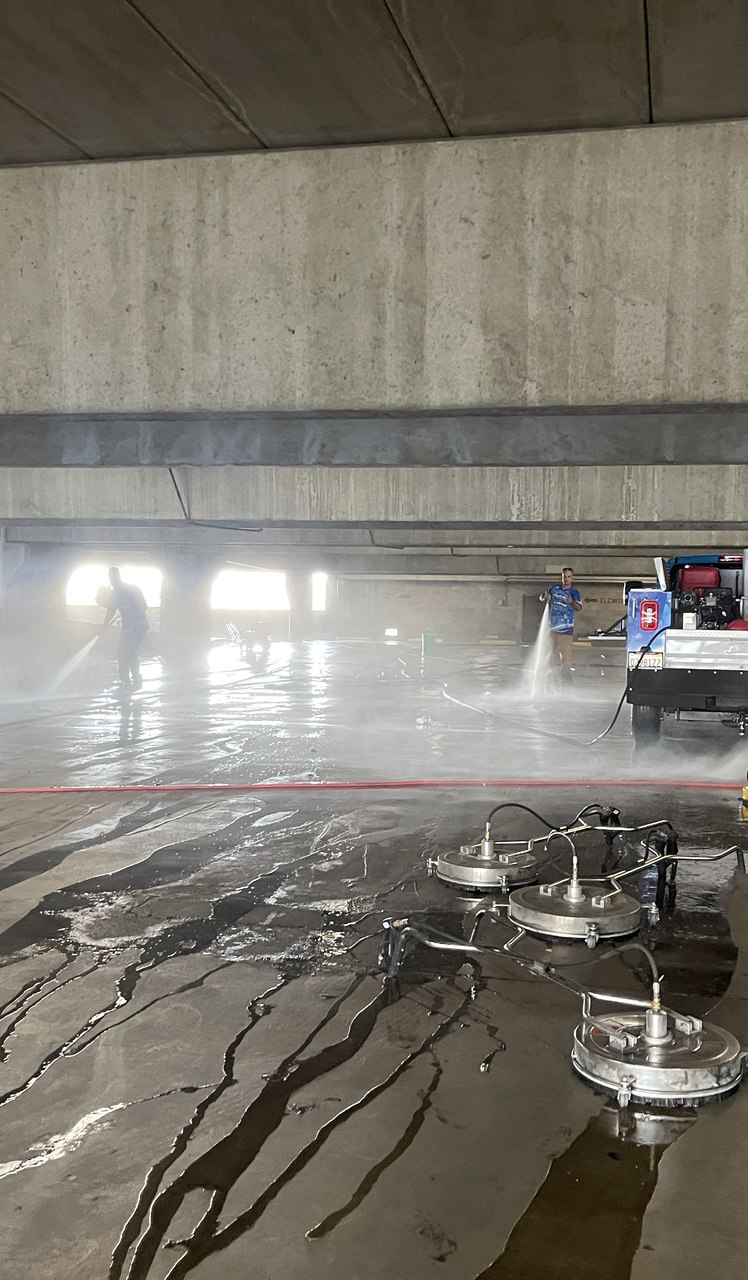
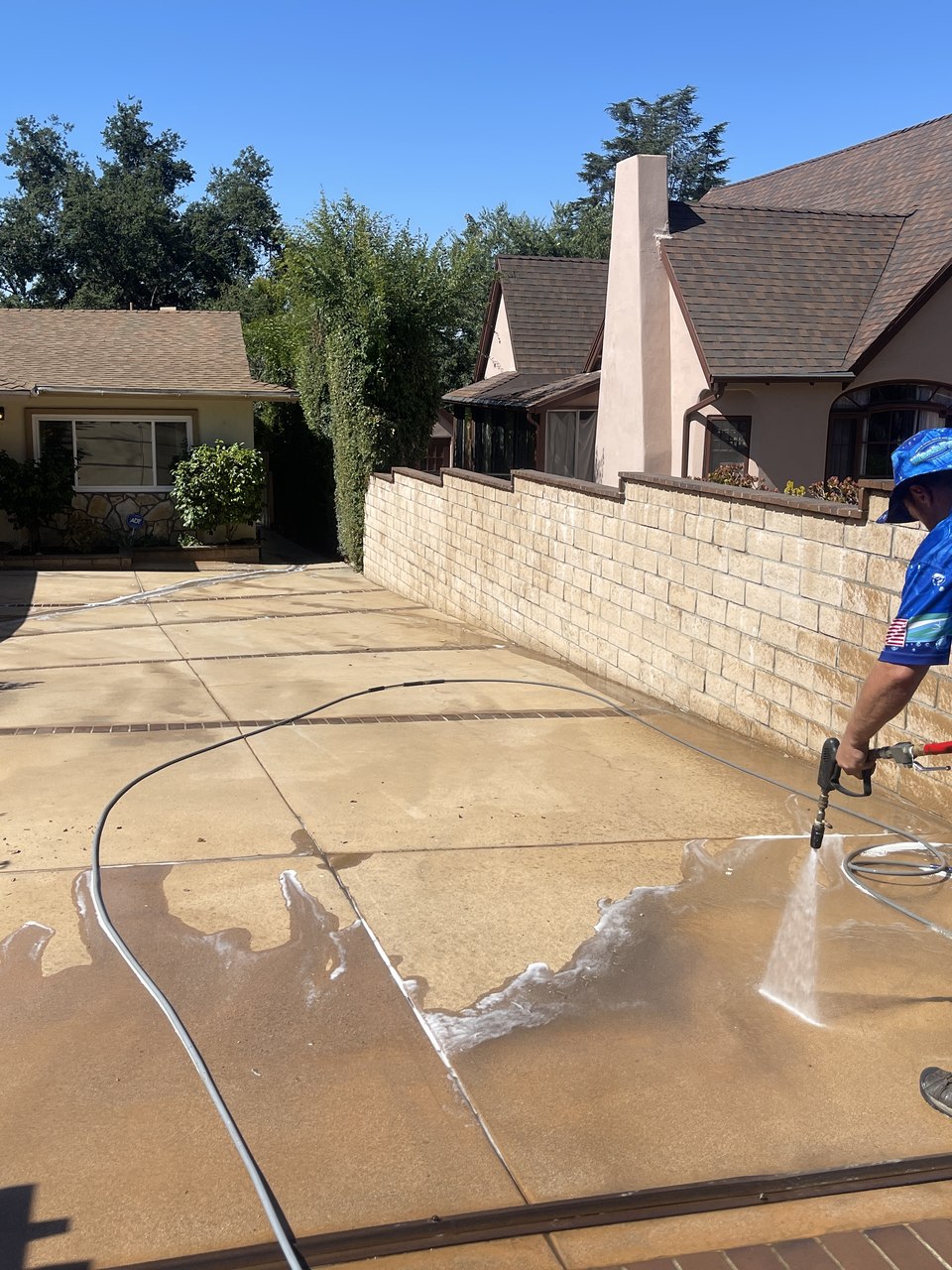
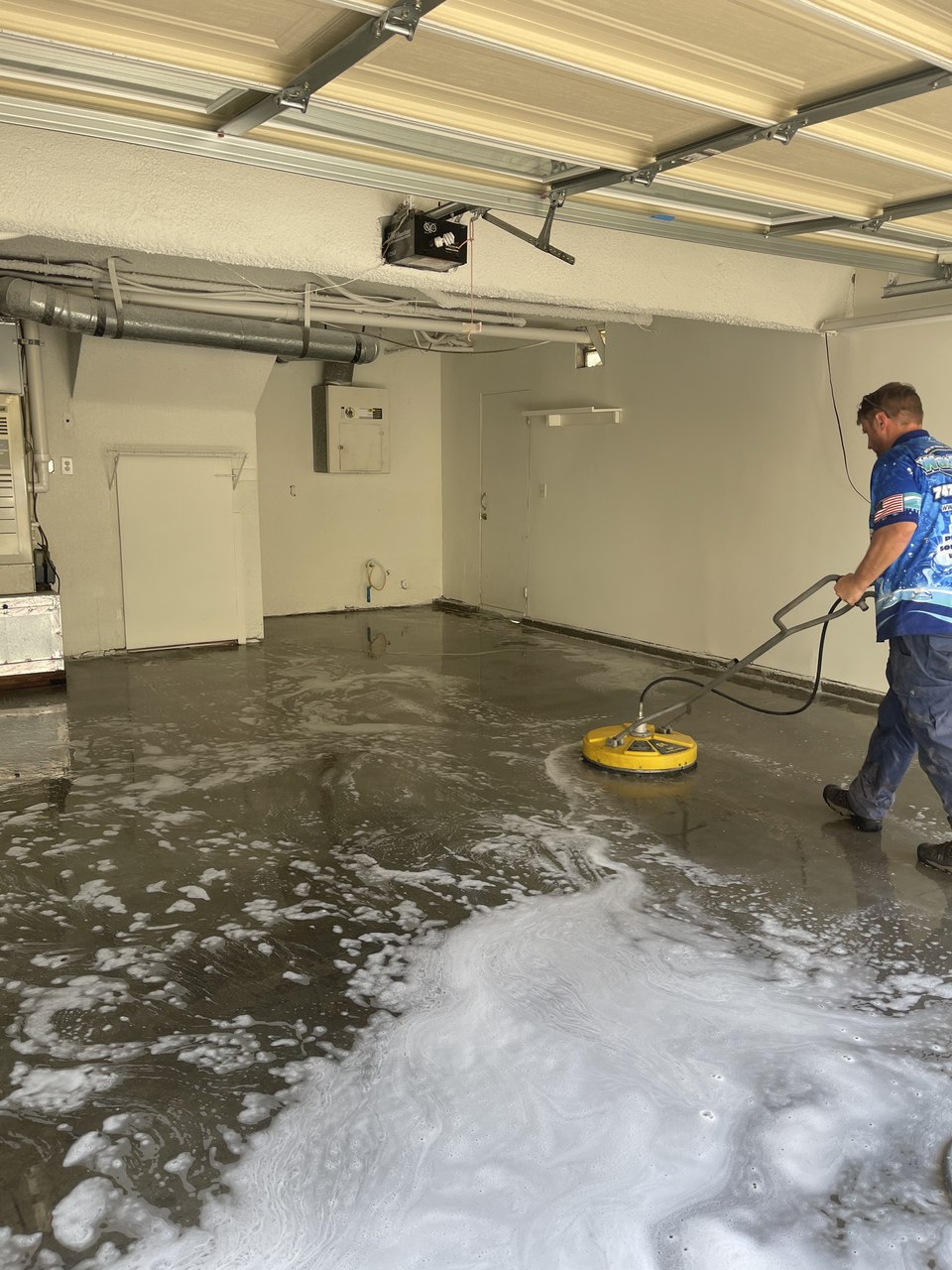
Concrete driveways and walkways accumulate contamination that chemical dwell time cannot address: motor oil, tire rubber transfer, rust from metal furniture, and compacted grit. These bond mechanically and need mechanical disruption. A surface cleaner attachment on a commercial pressure washer delivers that disruption evenly, lifting grime pressed deep into the slab's pore structure by years of traffic.
Brick pavers follow the same logic. Joints trap organic debris and sediment while paver faces develop a gray oxidation layer. Pressure washing flushes the joints and restores face texture, bringing a patio or driveway close to its original condition rather than just surface-wet-clean.
Pool decks present a safety case as well. Algae on concrete or Saltillo tile creates a slick film that is dangerous underfoot. Pressure washing removes the growth and restores traction, a functional result that goes beyond aesthetics.
Most surface damage from exterior cleaning comes from one of three errors: using high pressure on a delicate surface, applying the wrong chemical mix, or using correct pressure at the wrong angle and distance. Consumer-grade pressure washers at big-box stores give no fine control. Professional equipment does.
Damage patterns that follow incorrect pressure washing on a home:
The inverse problem, soft wash chemistry left on too long or mixed too strong, can bleach paint and damage landscaping. A trained operator controls dwell time and dilution ratios for each surface. That judgment comes from repetition across many property types.
Switching between soft washing and pressure washing mid-job is standard practice for most Southern California properties. Your home likely needs both.
A typical full-exterior clean across Los Angeles and Ventura County combines both methods on the same visit. The house washing portion uses soft wash chemistry on the walls, fascia, and any painted trim. The driveway and walkways get the pressure treatment with a surface cleaner head. The roof, if included, receives a dedicated low-pressure soft wash with appropriate dwell time. The team adjusts equipment settings between surfaces, not between crews or contractors.
That continuity matters. Splitting the job between two companies creates scheduling gaps and blurs accountability if something goes wrong. A single licensed and insured crew handles the complete scope and provides one point of contact from start to finish.
From the crew: The first question we ask on every estimate is what the surface is made of. Not how dirty it is, not how big it is. Material first. That tells us whether we're reaching for the chemical pump or the high-pressure wand. Getting that call wrong costs the homeowner money in repairs, so we take it seriously every time.
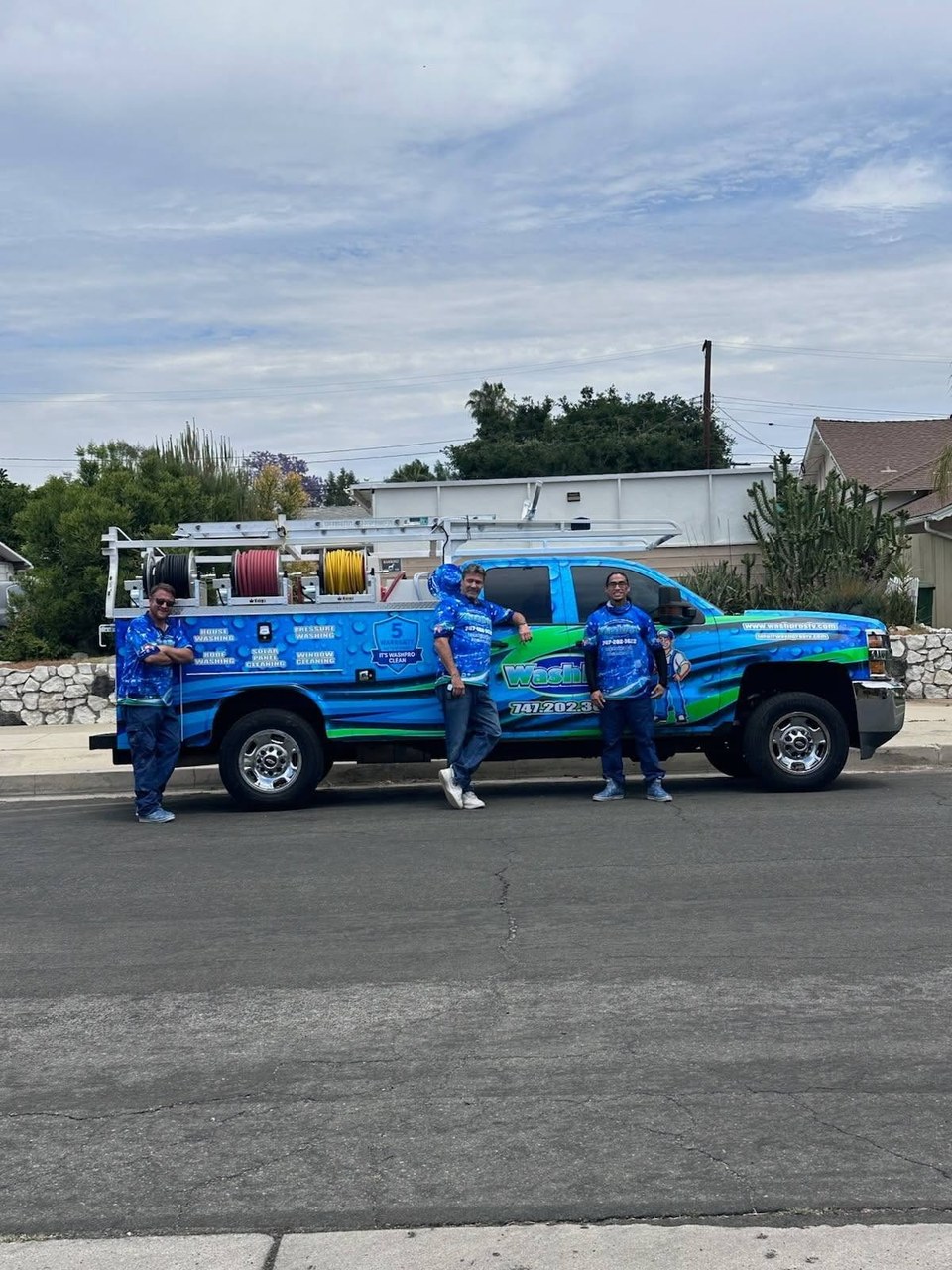
WashPro SFV is a family-run operation with reputation for consistent, careful work. The same crew returns on each visit. Read what customers across LA and Ventura County say on our reviews page, or get a quote for your property now.
Get A Free EstimateSoft washing is safe for the surfaces it is designed for: roofs, stucco, siding, painted wood, and other coated or porous materials. It is not always appropriate for dense masonry like concrete driveways or unsealed brick, where mechanical agitation is needed to remove embedded contaminants. The cleaning solution must also be rinsed promptly and at appropriate dilutions to avoid bleaching painted surfaces or damaging nearby landscaping. A professional operator controls both the chemistry and the application process.
In general, no. Stucco is a porous cement system with a moisture barrier behind it. High-pressure water penetrates cracks, gaps around windows, and penetrations for utilities. Once water gets behind the stucco layer it saturates the framing and can promote mold growth inside the wall cavity. Repairs to moisture-damaged framing and drywall are expensive. Low-pressure soft washing cleans stucco thoroughly without forcing water into the wall assembly. Some very modern, integral-color stucco in excellent condition may tolerate a light rinse, but that assessment should be made by someone on-site, not guessed from a distance.
A proper soft wash treatment that kills the biological growth at the root level tends to stay clean longer than a pressure wash that only removes visible surface contamination. For roofs and siding in the Southern California climate, a soft wash result typically lasts one to three years depending on proximity to moisture, tree cover, and coastal salt exposure. Pressure-washed concrete and pavers stay clean until traffic, weather, and organic debris accumulate again, which varies widely by location and use. Neither method is permanent. Regular maintenance extends the life of both the surfaces and the cleaning results.
Standard concrete in good condition handles pressure washing well when a professional surface cleaner is used at appropriate settings. Consumer-grade equipment operated by someone unfamiliar with concrete can cause problems: a zero-degree nozzle held too close to the surface etches lines into the concrete, and excessive dwell time on soft or spalled concrete widens existing cracks. A commercial rotary surface cleaner distributes the pressure evenly across a wide path rather than concentrating it in one stream, which is the professional approach. Severely cracked or compromised concrete should be assessed before any pressure washing to avoid worsening existing damage.
More practical information from the WashPro crew on exterior cleaning across Los Angeles and Ventura County.
Call, text or send the form. We'll get right back to you with a free, no-pressure estimate, anywhere in Los Angeles or Ventura County.
Thanks, we got it. A member of the WashPro crew will reach out shortly with your free estimate.
Or Call Us Now