A straight answer from the crew that does this work across Los Angeles and Ventura County every week.
Thanks, we got it. A member of the WashPro crew will reach out shortly with your free estimate.
Or Call Us NowMost Southern California tile roofs need cleaning every two to three years under typical conditions. Roofs under heavy tree cover or near the coast may need attention annually. WashPro SFV recommends a visual inspection every spring so problems get caught before algae streaks become permanent staining.
Cleaning your roof in Southern California is not the same math as cleaning a roof in Seattle or Atlanta. This region gets fewer of the steady rains that rinse organic matter off shingles naturally. Combine that with intense UV exposure, coastal moisture, and year-round particulate from nearby freeways and wildfires, and you have a climate that deposits grime steadily without washing much of it away. The result: Los Angeles and Ventura County roofs accumulate algae, oxidized mineral deposits, and debris faster than homeowners expect, and much of that buildup is invisible from the street until it has already started doing damage.
The right interval depends on your roof material, your immediate environment, and whether you have overhanging trees or a coastal address. Here is the breakdown WashPro's crew uses when assessing a property.
| Roof Type / Condition | Recommended Interval | Key Driver |
|---|---|---|
| Tile (concrete or clay), open exposure | Every 2-3 years | Algae and lichen growth cycles |
| Tile, shaded by mature trees | Every 12-18 months | Leaf debris traps moisture against tile |
| Tile, coastal (within a mile of the ocean) | Every 1-2 years | Salt air accelerates biological growth |
| Composition shingle, typical SoCal lot | Every 2-3 years | Algae streaking, granule degradation |
| Flat roof (modified bitumen / torch-down) | Annually | Debris pooling, drainage maintenance |
The coastal factor is significant. Properties in Malibu, Santa Monica, Pacific Palisades, and similar communities sit in air that deposits a fine salt film on every exposed surface. That salt film acts as a nutrient base for the same cyanobacteria responsible for black streaking. Properties inland, in places like Arcadia, Pasadena, or Arcadia, deal with a different problem: fine dust accumulation, occasional Santa Ana debris, and hard-water mineral deposits from irrigation overspray on the fascia. Neither condition is benign, and neither goes away on its own.
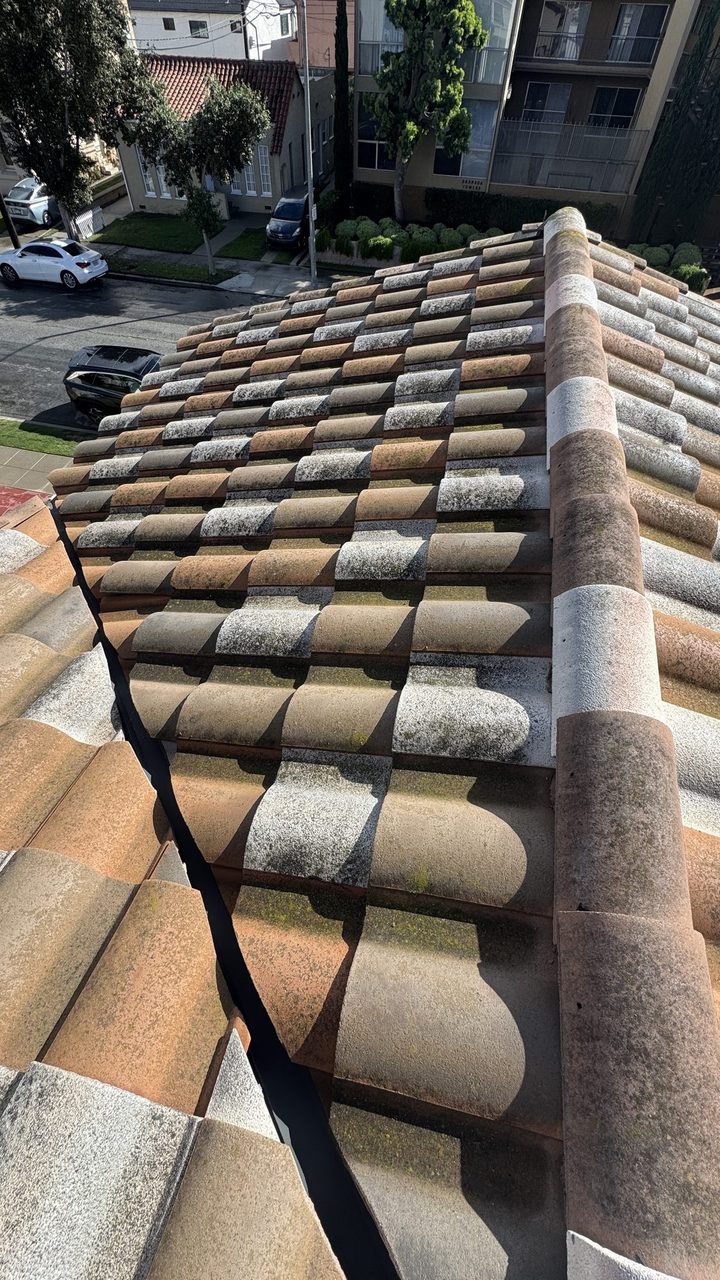
The dark staining you see on tile and shingle roofs across Southern California is almost always a cyanobacterium called Gloeocapsa magma. It arrives airborne, settles into the porous surface of roof tiles, and produces a dark protective pigment as a shield against UV radiation. That pigment is what you see as black or gray-brown streaking.
Left alone, Gloeocapsa magma does not stay cosmetic for long. The organism retains moisture against the tile surface, which accelerates the freeze-thaw micro-cracking in high-desert areas like La Canada Flintridge and Calabasas. In coastal areas, the retained moisture combines with salt air to etch tile glazing. Either way, a roof that looks stained is a roof that is aging faster than it should.
Lichen and moss compound the problem. Both anchor to the surface with rootlike structures called rhizines. Those structures physically penetrate tile and shingle material to anchor the organism, pulling out fragments when the organism eventually dies or is removed improperly. A high-pressure wash at this stage causes more harm than good. It strips granules from shingles and can crack older tile. The only correct method is low-pressure soft washing, which uses a professional-grade biocide solution to kill the organism at the root before rinsing at very low pressure.
Standard pressure washing pushes water at 2,000 to 4,000 PSI. Tile roofs are designed to shed water at low velocity, not withstand it at high velocity from directly above. Forcing high-pressure water under tile laps can saturate the underlayment, the very layer that sits between your tiles and your sheathing. A saturated underlayment does not dry quickly in the low-angle sun beneath tile, and sustained moisture there leads to rot, mold, and eventually structural damage to rafters. Composition shingles face a faster consequence: the granule layer, which reflects UV and protects the asphalt below, simply blasts off.
Soft washing operates at under 100 PSI, roughly the same force as a garden hose. The cleaning work is done by a diluted sodium hypochlorite solution applied through a downstream injection system. The chemistry kills Gloeocapsa magma, lichen, moss, and algae at the cellular level. After a dwell time, the roof is rinsed clean, and the organisms do not return for considerably longer than they would after a pressure wash that only removed surface growth without addressing the root biology.
This is the method WashPro uses on every residential roof, and it is the method recommended by virtually every major tile and roofing manufacturer warranty. Applying high pressure to a warrantied roof can void that warranty outright.
"When we arrive at a property and the homeowner mentions the last company 'power washed' the roof, we often find cracked tile edges and compressed underlayment vents before we even start. The savings from a cheap pressure wash typically cost more in repairs two years later." -- WashPro SFV field crew
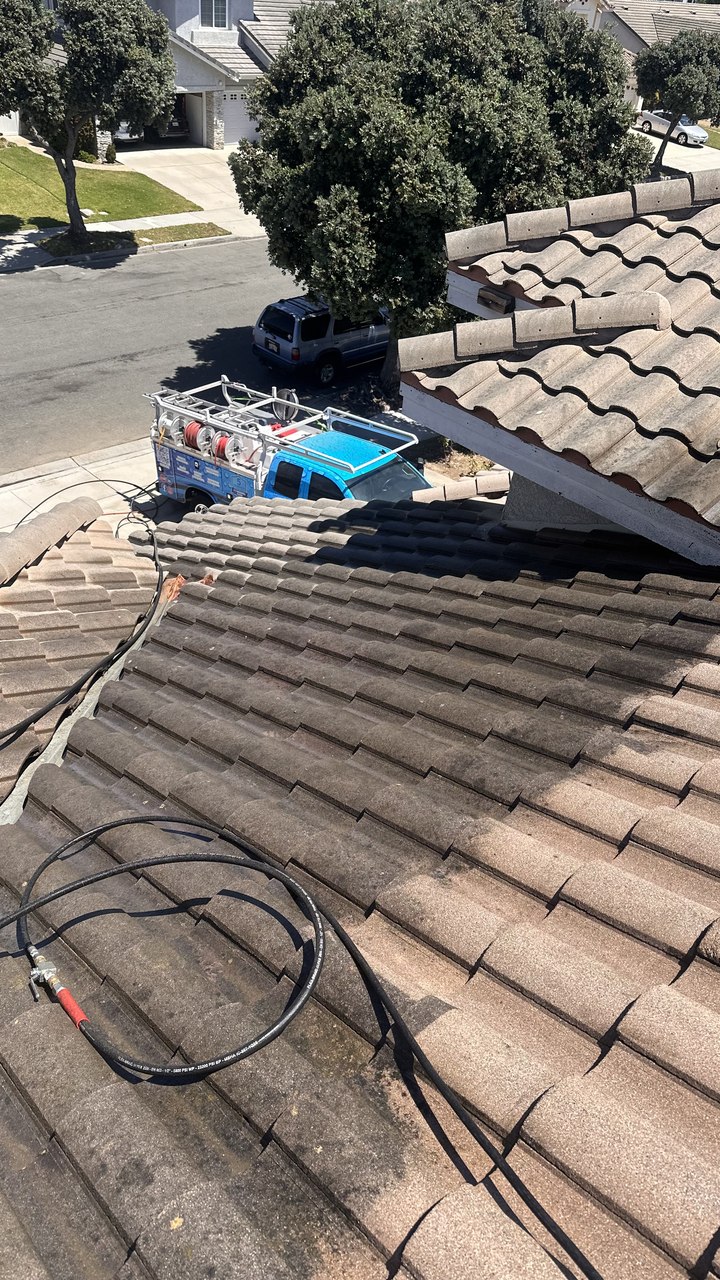
You do not need to wait for the two-year interval if your roof is displaying any of these conditions. Each one indicates active biological growth or debris accumulation that is doing measurable harm right now.
Insurance carriers have become notably more aggressive about roof condition in Southern California, particularly since the wildfire seasons of recent years prompted widespread policy reviews across LA County. A number of carriers operating in this region now include provisions that allow non-renewal or increased premiums for homes where the roof shows advanced biological growth, deferred maintenance, or visible granule loss. The reasoning is straightforward: a well-maintained roof is far less likely to fail catastrophically during a wind event or following fire ember exposure.
A clean roof is not a guaranteed insurance outcome. But a documented service history showing regular soft washing by a licensed, insured contractor is exactly the kind of maintenance record that can support your position if a carrier questions the condition of your property. At minimum, a clean roof removes one line of argument a carrier might use during a claim dispute.
Curb appeal has a more direct financial calculation. Appraisers and buyers notice roof condition immediately. A tile roof streaked with a decade of algae growth reads as neglect, regardless of how well-maintained the interior is. For homeowners in competitive SFV, LA and Ventura markets, a professionally cleaned roof before listing can shift buyer perception from "what else has been deferred?" to "this owner takes care of the property." Real estate agents frequently report that exterior cleaning, including the roof, ranks among the highest-return pre-sale investments.
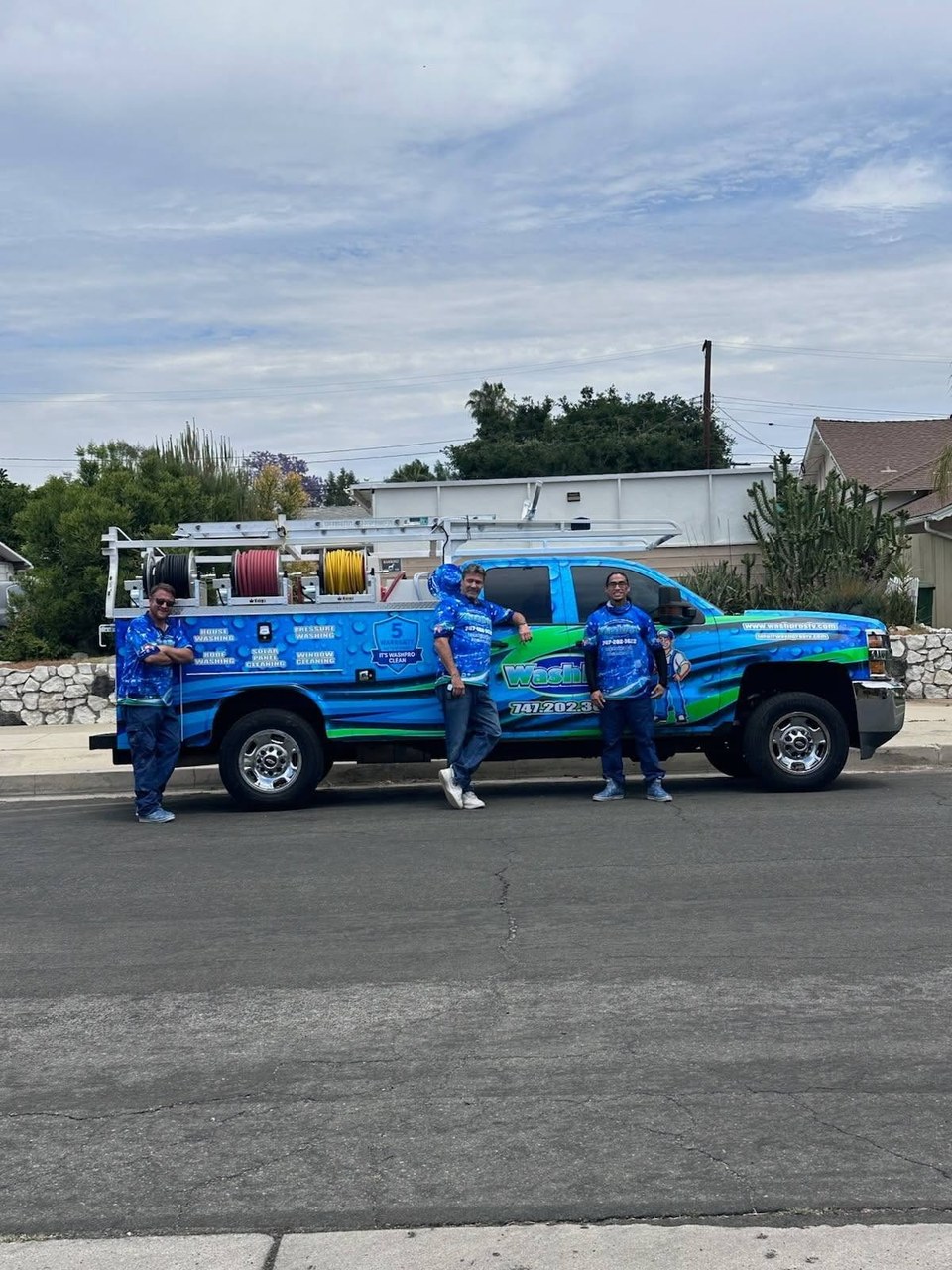
WashPro SFV is a family-run, licensed, and insured company based in the San Fernando Valley. The same crew handles your property every visit, which means consistent technique and someone who knows what your roof looked like last time. With reputation for consistent, careful work, the track record speaks directly.
We serve properties from Malibu and Pacific Palisades down through the South Bay, into Ventura County communities like Thousand Oaks, Malibu, and Simi Valley. If your property sits within Los Angeles County or Ventura County, we cover it.
See exactly what the process looks like and what to expect on our roof cleaning service page, or call 747-202-3622 to talk through what your roof needs. Getting a precise quote takes less than five minutes. Request yours here.
Soft washing extends roof life. The organisms that produce visible staining physically degrade tile and shingle material over time. Removing them through a low-pressure biocide application is far less damaging than leaving the growth in place for another two or three years. High-pressure washing, by contrast, can damage a roof. Always verify that any contractor you hire is using soft washing at under 100 PSI for a tile or composition shingle roof.
Most consumer pressure washers operate at 1,500 to 2,000 PSI, which is well above the threshold for safe tile cleaning. Beyond the equipment issue, working on a wet roof at height without fall arrest gear is among the more dangerous DIY tasks a homeowner can attempt. The cost of a professional soft wash is modest compared to an emergency room visit or a voided roofing warranty.
For a typical single-story residence, the process takes two to four hours including setup, biocide application dwell time, and rinse. Larger two-story properties or roofs with significant biological growth may take longer. We schedule a window and give you a direct call when the crew is on the way.
Gloeocapsa magma is airborne and will eventually re-establish on any roof. A proper soft wash kills the organism at the root level rather than just removing visible surface growth, which substantially delays re-growth compared to a pressure rinse alone. Most SoCal tile roofs treated with a biocide application stay clean for two or more years before visible staining returns.
These articles cover related exterior cleaning topics worth reading before or after your roof service.
Call, text or send the form. We'll get right back to you with a free, no-pressure estimate, anywhere in Los Angeles or Ventura County.
Thanks, we got it. A member of the WashPro crew will reach out shortly with your free estimate.
Or Call Us Now