A straight answer from the crew that does this work across Los Angeles and Ventura County every week.
Thanks, we got it. A member of the WashPro crew will reach out shortly with your free estimate.
Or Call Us NowDampen dried droppings first, apply an enzyme-based or diluted alkaline cleaner, let it dwell for 3-5 minutes, then rinse with low-to-medium pressure water. On solar panels, use only soft water and a gentle brush - never abrasive pads or high pressure. WashPro SFV handles bird dropping removal across Los Angeles and Ventura County using EPA-registered disinfectants and proper respiratory protection.
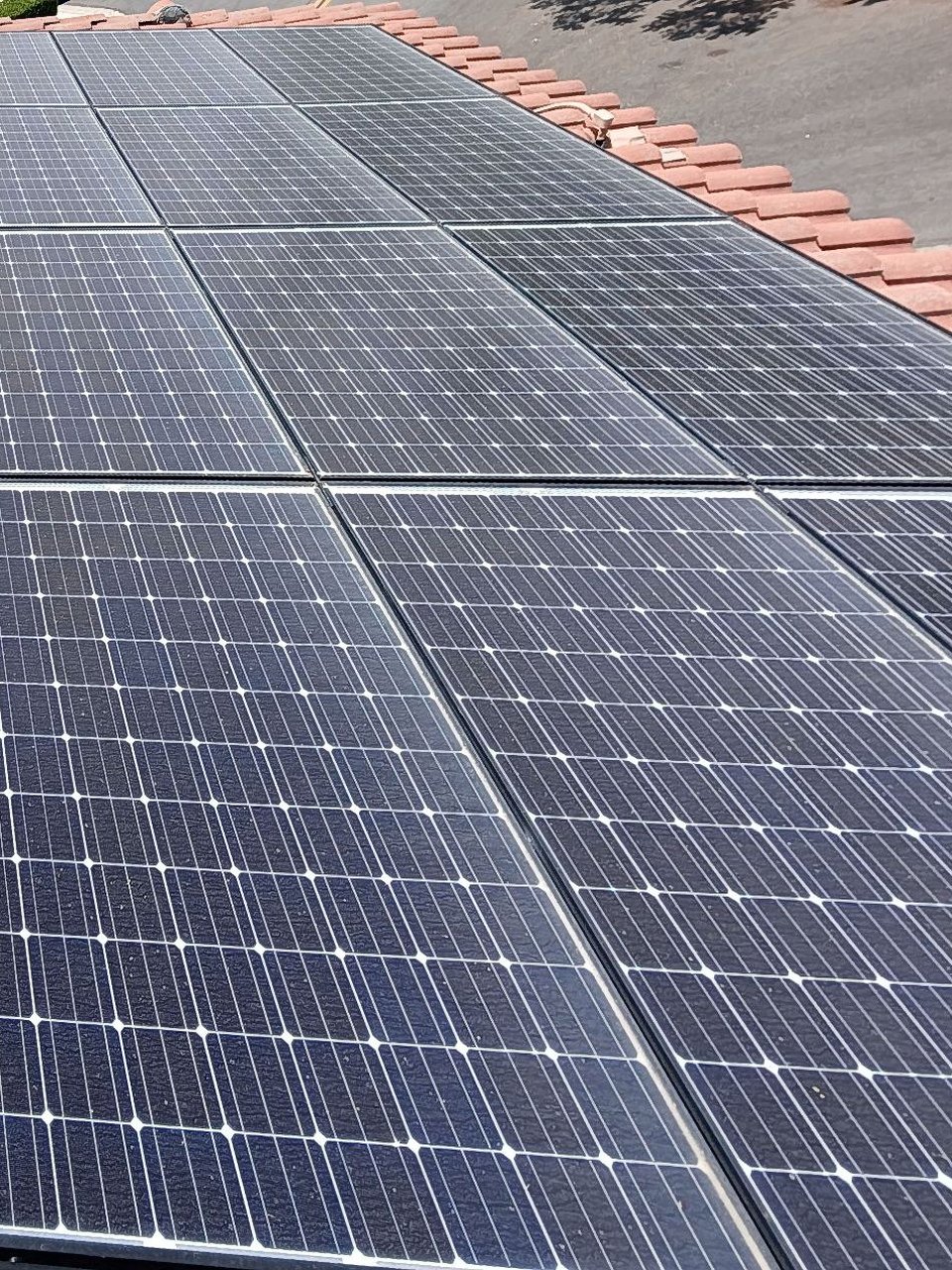
Bird droppings are one of the most corrosive contaminants a building or solar array will face in Southern California. Pigeons, starlings, and seagulls are abundant throughout LA and Ventura County, and their waste does real, measurable damage to stucco, concrete, painted surfaces, and glass if left untreated. This article covers exactly how to clean bird droppings off buildings and solar panels safely, what products actually work, and when it makes more sense to call a professional crew.
Droppings are not just an aesthetic problem. The chemistry is actively working against your building every day they sit.
Bird droppings contain uric acid - a compound that does not dissolve in water the way other biological waste does. That acid is what makes fresh droppings so sticky and dried droppings so tenacious. On painted stucco or concrete, uric acid penetrates the surface pores within days. On metal flashing and aluminum window frames, it accelerates oxidation. On glass and solar panel surfaces, it etches a frosted haze that scatter light and cuts panel efficiency.
The damage timeline matters. Fresh droppings are far easier to remove than dried accumulations. Material left on stucco for months starts to etch the finish coat. Accumulations on HVAC units and roof vents can corrode metal housings. On solar panels, heavy fouling creates hot spots where current is blocked - a condition that, over time, degrades cell performance beyond what a single cleaning can restore.
Beyond surface damage, there is a real health dimension. Dried bird droppings can carry Histoplasma capsulatum spores, Cryptococcus, and Salmonella. These become airborne when disturbed by scraping or high-pressure washing without proper containment. This is why the cleanup method matters as much as the cleaning itself.
| Surface | Risk Level | Primary Damage | Typical Dwell Time Before Permanent Damage |
|---|---|---|---|
| Painted stucco | High | Acid etching, paint lift | 2-4 weeks |
| Solar panel glass | High | Surface hazing, hot spots | Days to weeks |
| Concrete/pavers | Medium | Staining, surface erosion | Several months |
| Metal flashing/gutters | Medium-High | Oxidation, corrosion | 4-8 weeks |
| Window glass | Medium | Light etching, hard staining | 2-6 weeks |
| Clay or concrete tile roof | Medium | Staining, biological growth seeding | Several months |
Getting the process right protects both the surface and the person doing the cleaning.
The single most important step happens before any product touches the surface: rehydration. Dried droppings that are scraped dry or blasted with pressure immediately become a fine particulate cloud. That cloud contains whatever pathogens were in the original material. Always wet the area first.
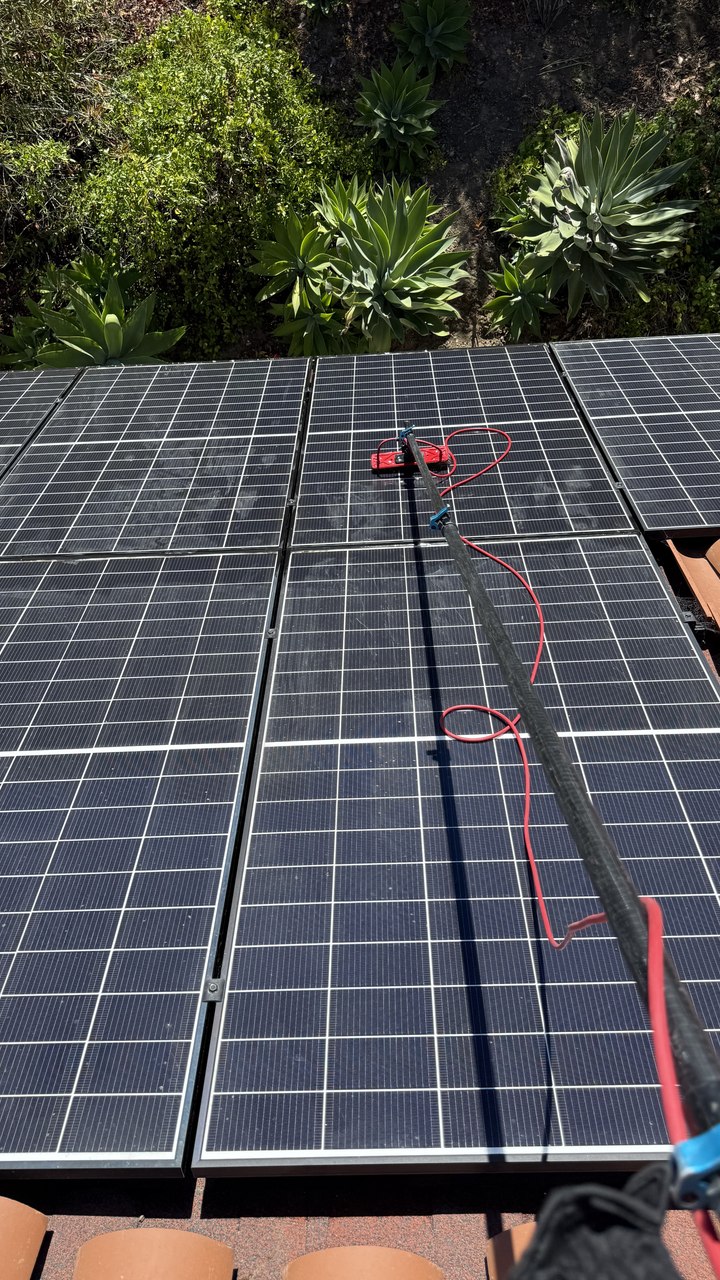
Solar panels require more care than any other surface. The tempered glass coating is surprisingly vulnerable to micro-scratching, and some panel warranties specifically prohibit high-pressure washing. The correct approach for panels:
For residential solar panel cleaning, the combination of soft water technique and proper dwell time is what separates a result that restores output from one that just moves the problem around.
"The mistake most people make is going straight at dried droppings with a pressure washer. High pressure on dry material turns it into a mist you breathe in. Wet it, dwell it, then rinse at controlled pressure. That sequence protects the surface and the person cleaning it. On panels, we always follow with a deionized rinse - you want zero mineral residue left behind."
Cleaning is reactive. Deterrents reduce how often you need to clean in the first place.
Commercial and multi-story residential buildings in SFV, LA and Ventura deal with pigeons and gulls year-round. The coastal climate, open food sources, and warm building ledges create ideal roosting conditions. No single deterrent is 100% effective, but layered approaches deliver real reductions in fouling frequency.
| Deterrent Type | Best Application | Effectiveness | Notes |
|---|---|---|---|
| Bird spikes | Flat ledges, parapets, signage tops | High for perching prevention | Stainless steel outlasts plastic; UV in SoCal degrades plastic quickly |
| Bird wire systems | Wide ledges, beams, architectural details | High when installed correctly | Less visible than spikes; good choice for historic or premium facades |
| Solar panel mesh | Roof solar arrays | Very high for panel-specific protection | Prevents nesting under panels, the most damaging configuration |
| Bird netting | Large flat roof areas, loading docks | High for targeted coverage zones | Requires professional installation for tensioning to last |
| Optical gel | Ledges, HVAC units | Moderate; degrades in direct sun | Non-lethal; requires replacement every 2-3 years in SoCal heat |
| Predator decoys | Rooftop general areas | Low to moderate; birds adapt quickly | Require regular repositioning to maintain any deterrent effect |
Pigeons nesting directly beneath solar panels create several compounding problems. First, the nesting material can block airflow, causing panels to run hot and lose efficiency. Second, the concentrated droppings on the panel frames and glass are far heavier than random fouling. Third, nests attract rodents that chew wiring. A properly installed critter guard mesh clipped to the panel frames addresses all three issues. This is one of the highest-value preventive investments a property owner with a rooftop array can make in Southern California.
Our team handles commercial bird dropping removal for buildings throughout LA and Ventura County, and the properties that struggle most are those where a deterrent program was never put in place after the first serious fouling episode. Clean once, then protect.
Some situations are straightforward DIY. Others have enough scope, height, or contamination risk that professional handling is the right call.
Residential homeowners dealing with droppings on a ground-floor patio, driveway, or walkway can generally handle the work themselves following the process above. The variables that push a job toward professional territory:
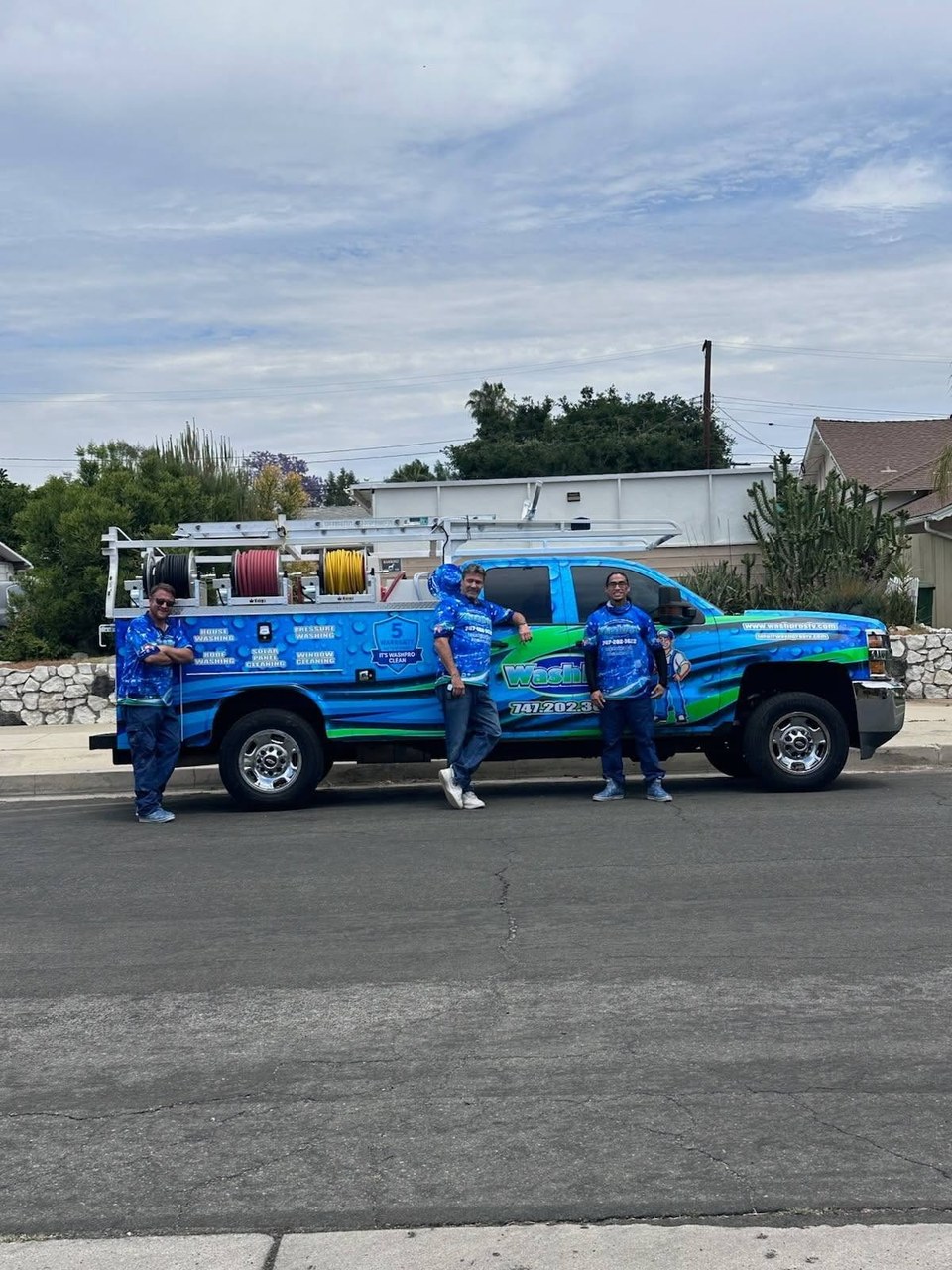
WashPro SFV is a licensed and insured, family-owned operation serving Los Angeles and Ventura County. The crew uses enzyme-based cleaners and EPA-registered disinfectants, carries proper PPE for contaminated surfaces, and brings soft-water equipment for panel work. Read what clients say on our Google reviews page or get a no-pressure estimate by calling 747-202-3622.
Pressure washing removes bird droppings from stucco when done correctly. The key variables are pressure and preparation. Stucco is a finish coat typically 1/4 to 3/8 inch thick, and high pressure (above 1,500 PSI) can erode or pit the surface. The correct approach is to pre-soak the deposit, apply a cleaner, then rinse at 600-1,000 PSI with a fan tip at an oblique angle. Do not direct the stream perpendicular to the wall, which drives water behind the stucco coat. Droppings that have etched the finish may leave a permanent faint shadow even after the organic material is removed.
Yes, bird droppings can permanently damage solar panels if left long enough. Uric acid in the droppings etches the anti-reflective coating on panel glass over weeks to months. More immediately, heavy fouling that blocks current flow creates hot spots - areas of elevated temperature in cells that are shaded while surrounding cells produce power. Repeated hot spot stress causes micro-cracks in the cell that no cleaning will reverse. The practical guidance: clean panels as soon as you notice significant fouling rather than waiting for a scheduled service interval. Panels with modest fouling respond well to a proper soft-water cleaning with no lasting effects.
The right frequency depends on the species pressure at your specific building and what deterrents are in place. Buildings near water, marinas, or food service operations in SFV, LA and Ventura deal with gulls and pigeons year-round. Without deterrents, a quarterly cleaning schedule is typical for heavily fouled commercial buildings. With a solid spike-and-mesh program, annual or biannual cleaning is sufficient to keep surfaces in good condition. For solar panels, most properties in Southern California benefit from two to four cleanings per year given the year-round bird activity combined with dust and pollen that compounds the fouling.
A diluted bleach solution (approximately 1 part bleach to 10 parts water) is acceptable on unpainted concrete driveways and sidewalks. It disinfects effectively and removes organic staining. Do not use bleach on painted concrete, colored paver surfaces, or natural stone - it strips color and can cause permanent discoloration. On stucco walls, diluted bleach risks bleaching out integral color pigments, particularly on older stucco finishes. For those surfaces, an enzyme-based cleaner is the safer choice. Always rinse thoroughly after any bleach application, and do not allow runoff to reach planting areas or storm drains.
Call, text or send the form. We'll get right back to you with a free, no-pressure estimate, anywhere in Los Angeles or Ventura County.
Thanks, we got it. A member of the WashPro crew will reach out shortly with your free estimate.
Or Call Us Now